

Blog
Beyond Calories: The Surprising Science of Why Children “Stall” and How Probiotics are Rewriting the Growth Chart
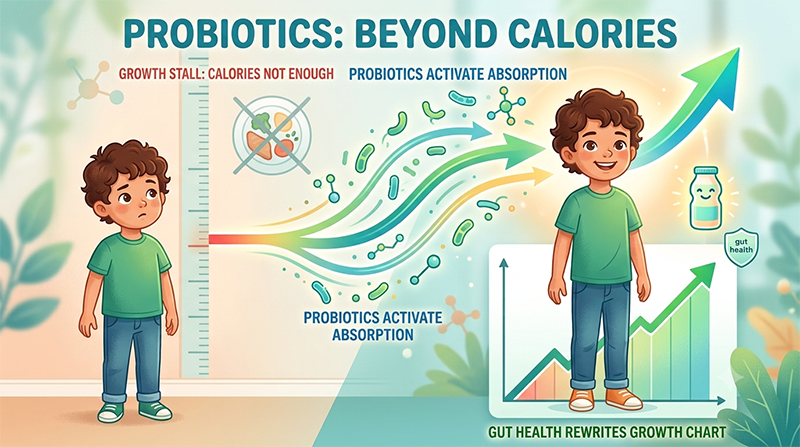
It is a striking paradox of modern parenting: we have more access to high-quality food than any generation in history, yet our children’s development often seems to hit a mysterious wall. Recent data reveals that over 93% of parents reported their children faced health concerns in the past year, ranging from digestive issues and skin sensitivities to “brain fog” and growth stalls.
While the dinner plate may look abundant, the body is often operating in a state of “Hidden Hunger.” In China alone, nearly 90% of infants and young children suffer from this silent nutritional gap, where the system is functionally starving even when the stomach is full.
To unlock a child’s full potential, we must look beyond the kitchen and into the microscopic world of the “second brain.” Emerging biotechnology is proving that the secret to growth isn’t just about what we put into the engine, but how we fix the engine itself.
The “Hidden Hunger” Ghost in the Nursery
Hidden Hunger is a deceptive state of nutritional imbalance. It occurs when a child consumes ample calories but lacks the critical micronutrients—specifically calcium, iron, zinc, and essential vitamins—needed to execute their developmental blueprint.
As a journalist covering pediatric science, I often see parents focus on volume, but the body focuses on value. Probiotics act as the vital bridge, ensuring that the raw materials of nutrition are actually recognized and utilized by the child’s cells.
“Nutritional hidden hunger refers to a state of nutritional imbalance where the body lacks specific micronutrients (such as calcium, iron, and zinc) and essential vitamins, even if there is an over-consumption of other nutritional components.”
Not All Bacteria Are Created Equal: The “Dual-Coating” Secret
Most parents don’t realize that standard probiotics often perish before they can do any good, destroyed by the high-acid environment of the stomach. The breakthrough CBT Dual-Coating technology functions like high-tech “armor” to ensure these tiny workers reach their destination alive.
This patented process uses a unique Matrix Binding system. An inner Protein Matrix protects the bacteria through the stomach and only triggers a release when it senses the alkaline environment of the intestines.
A second Polysaccharide Layer guards against external heat and moisture during shelf life. Without this dual-stage shield, even the most expensive supplements can become effectively useless before they ever cross the intestinal threshold.
Growing “Up” Without Eating “More”
Perhaps the most “Aha!” discovery in recent animal studies is the shift in how we measure growth. Scientists observed subjects experiencing significant weight gain and physical development without any increase in food intake.
The key is the WG/FI ratio (Weight Gain to Food Intake), a metric that proves “Nutrient Absorption Efficiency” is more important than pure caloric volume. By optimizing the gut environment, specific patented strains—Bifidobacterium longum CBT BG7 (Patent CN113367346A) and Bifidobacterium breve CBT BR3 (Patent KR101589465B1)—allow the body to extract more “growth fuel” from every single bite.
Your Child’s Gut is a Vitamin Factory
Here is the real magic: your child doesn’t just have to be a consumer of vitamins; with the right microbial partners, they become a producer. Through a process called “Endogenous Synthesis,” specific CBT bifidobacterium strains actually manufacture B-group vitamins right inside the child’s body.
These vitamins provide a dual foundation: they prioritize energy for physical growth by boosting immune resistance, while simultaneously strengthening the nervous system.
| Vitamin | Scientific Name | Role in Development |
| Vitamin B2 | Riboflavin | Essential for energy production and building immune defense. |
| Vitamin B3 | Nicotinate | Supports the nervous system and maintains healthy skin. |
| Vitamin B9 | Folate | Critical for DNA synthesis and healthy cell division during growth. |
The Brain-Gut-HMO Connection
We’ve long known that Human Milk Oligosaccharides (HMOs) are the gold standard for infant health, but we now know why they work so well with specific microbes. Strains like CBT BT1, BF3, BR3, and BG7 are uniquely “genetically equipped” with HMO utilization genes that standard probiotics simply lack.
When these specific strains metabolize HMOs, they facilitate the creation of richer neural synapses, leading to a more highly developed nervous system and sharper cognitive function.
Beyond brainpower, this connection creates a “natural defense barrier.” It prevents aggressive pathogens like E. coli and Salmonella from adhering to the gut wall, protecting the child’s developmental timeline from being derailed by infection.
Beyond the Belly: Skin and Immunity
The reach of a healthy gut extends all the way to the skin’s surface. In a clinical study of 50 patients struggling with Atopic Dermatitis, researchers found that CBT dual-coated probiotics significantly lowered EASI scores (symptom severity) and reduced inflammatory factors like IgE.
This is largely due to a specialized ingredient called Prolac-T™ (Patent CN 102725397 B). It uses a mechanism known as “hydrophobic interaction” to physically grab onto pathogens and toxic substances like LPS (lipopolysaccharides).
Instead of letting these toxins enter the bloodstream to cause inflammation or skin flares, Prolac-T™ adheres to them and ensures they are safely expelled from the body.
A New Blueprint for Development
We are entering an era where pediatric health is moving from “feeding” to “optimizing.” By addressing Hidden Hunger and utilizing dual-coated technology, we aren’t just giving children more to eat; we are giving them a more efficient way to grow.
The microscopic world of the gut is the true blueprint for a child’s future. It determines how they think, how they fight off illness, and how they reach their full physical potential.
If the gut is the engine of a child’s growth, are we merely providing the fuel, or are we finally fixing the engine?