

Blog
Why Your Probiotic Might Be Failing: The Invisible Technology Revolutionizing Gut Health
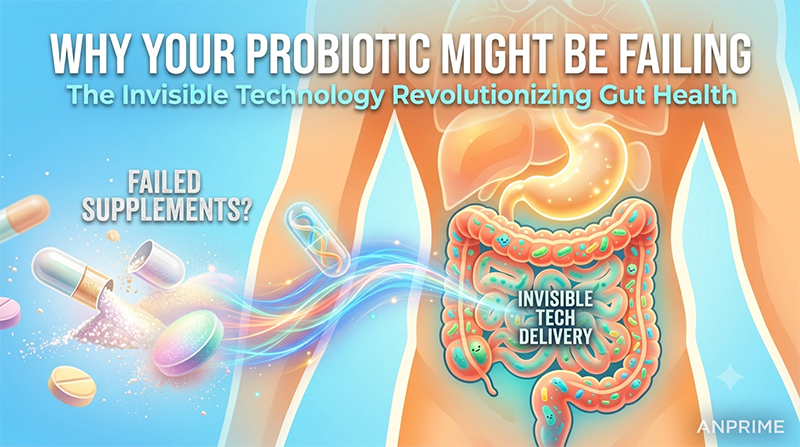
Many health-conscious individuals invest in premium supplements only to find themselves stuck with what industry insiders call “Ghost CFUs”—billions of bacteria that look impressive on a label but are effectively dead on arrival. This common frustration stems from a fundamental bottleneck in supplement design: survival. While marketing teams focus on the sheer number of Colony Forming Units (CFUs), health-tech journalists have identified that the real secret to efficacy isn’t the quantity of the dose, but a world-patented delivery system known as “Matrix Binding.”
The Protein “Hazmat Suit” for Your Gut (Step 1)
Engineers developed the “Matrix Binding” manufacturing process as a two-step solution to a biological paradox. The first stage involves constructing an inner protein matrix structure directly around the live Lactic Acid Bacteria.
In the world of digestive health, the most “counter-intuitive” reality is that a fast-acting probiotic is a failed probiotic. Most consumers expect their supplements to start working immediately, but if a probiotic releases its cargo in the stomach, the battle is already lost. The stomach’s harsh, acidic environment is designed to break down organic matter; for unprotected Lactic Acid Bacteria, this environment is a graveyard. This protein layer bypasses this traditional failure point by acting as a biological “hazmat suit,” ensuring the bacteria remain dormant and shielded during the “acid test” of gastric passage.
“The protein matrix structure is specifically designed to protect the live bacteria as they pass through the stomach… ensuring that the probiotics survive the harsh acidic environment and are delivered safely to the intestinal tract.” — Technical Source Documentation
The Polysaccharide Armor Against the Elements (Step 2)
While the inner matrix handles internal biological threats, the second step of the Matrix Binding process applies an outer polysaccharide coating. This layer was engineered to solve for the “shelf-life decay” that plagues traditional supplements.
Lactic Acid Bacteria are notoriously sensitive to their environment long before they reach your kitchen counter. Without this secondary barrier, external stressors can trigger premature activation or cellular death. This polysaccharide armor protects the product against three specific environmental killers:
- Heat: Preventing cellular degradation during transport and varying storage temperatures.
- Moisture: Shielding the bacteria from humidity, which can otherwise compromise the stability of the Lactic Acid Bacteria.
- Physical Pressure: Ensuring the structural integrity of the bacteria during the high-intensity manufacturing and packaging process.
Precision “Targeted Release” vs. Random Luck
The difference between CBT (Dual-Layer Coating) technology and traditional, “uncoated” probiotics is the difference between an engineered delivery vehicle and a game of random luck.
Investigative data shows that uncoated probiotics frequently suffer from “random release,” where they are either incinerated by stomach acid or released in the upper digestive tract where they cannot survive. CBT technology, however, is engineered for targeted release. By utilizing the Matrix Binding system, the coating is designed to hold the Lactic Acid Bacteria intact until they reach the specific pH environment of the intestinal tract. This shifts the focus from “more bacteria” to “right location,” ensuring the probiotics are active exactly where they are needed to support the microbiome.
A Breakthrough for Growing Guts
The implications of this technology are most profound for pediatric health. A child’s microbiome is a developing ecosystem—essentially “under construction”—and requires more than just a transient dose of bacteria. The ultimate goal of probiotic therapy is colonization: the process of bacteria “moving in” and establishing a presence, rather than just passing through.
By maintaining higher activity and stability than traditional supplements, CBT technology helps Lactic Acid Bacteria better colonize the intestinal tract. It provides a level of delivery and colonization efficiency that uncoated probiotics simply cannot achieve. For a developing digestive system, this ensures that the “seeds” being planted actually have the protection they need to take root and flourish.
Global Validation and the “CBT Advantage”
The “CBT Advantage” is not merely a marketing claim; it is a globally recognized standard of quality. The Matrix Binding system serves as a critical trust signal because it has secured patents in some of the world’s most stringent regulatory markets for health-tech and bio-engineering. These include:
- The European Union & Japan: Known for having some of the most rigorous safety and efficacy standards in the world.
- The United States
- South Korea
- China
For the consumer, these patents validate that the dual-layer system provides superior absorption capabilities and higher bacterial activity compared to the “Ghost CFUs” found in traditional, unprotected methods.
The Future of Digestive Resilience
Matrix Binding is fundamentally changing the standard for probiotic efficacy. By shifting the focus from the quantity in the bottle to the survival of the bacteria, this technology ensures that the supplements we take can actually perform their intended function within the gut. We are moving away from an era of “random survival” and toward an era of engineered resilience.
The next time you reach for a probiotic, will you be looking at the number on the bottle, or the technology that ensures those numbers actually reach your gut?