

Blog
Beyond Digestion: 5 Surprising Ways Probiotics Protect the Path to Motherhood
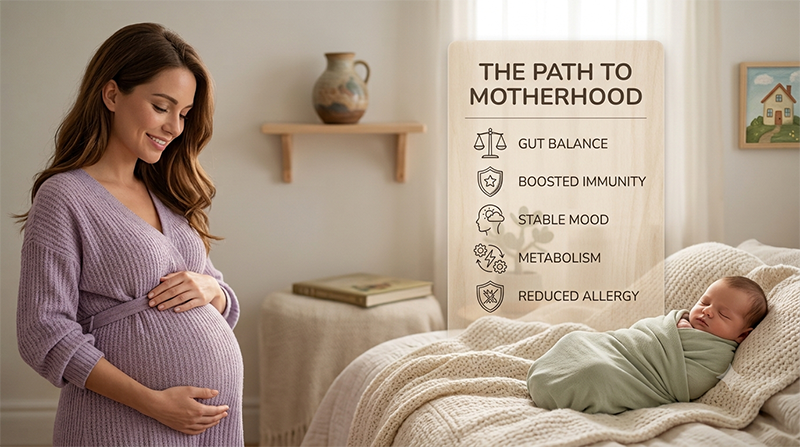
When we consider a baby’s “first environment,” the mind naturally settles on the womb. Yet, modern microbiome science invites us to look closer at a second, equally vital gateway: the vaginal microbiome. This microbial landscape serves as the child’s true entry point into the world, acting as a biological shield that influences health long after the moment of birth.
For the expectant mother, the health of this environment is dictated by a delicate equilibrium. When this balance is disrupted—a state known as dysbiosis—the consequences extend far beyond simple “gut health.” Hidden microbial imbalances are now known to impact the trajectory of pregnancy and the “fourth trimester” recovery. For the health-conscious parent, understanding the protective power of probiotics isn’t just about digestion; it is about managing the invisible gateway to motherhood.
The Lactic Acid Shield: Safeguarding the Birth Canal
The vaginal passage is a newborn’s first encounter with the microbial world. To ensure this journey is safe, the environment must be rigorously defended against pathogens that could compromise the health of the fetus.
Beneficial bacteria, specifically those in the Lactobacillus genus, act as the primary defenders of this path. These probiotics secrete lactic acid, creating a naturally acidic environment that inhibits the growth of harmful bacteria. In this way, a mother’s microbiome serves as the newborn’s first line of immune defense.
“The vagina is the path the fetus must take to enter this world (the birth canal), and harmful bacteria must be inhibited.”
By maintaining this “lactic acid shield,” mothers provide a clean passage for the child. This ensures that the very first environment the infant touches is defined by protective, life-sustaining bacteria rather than harmful pathogens.
The Prevention Paradox: Reducing Premature Birth Risks
A common misconception in prenatal care is that treating a clinical infection, such as Bacterial Vaginosis (BV), as it arises is sufficient. However, research reveals a “prevention paradox”: even if BV is successfully treated and cured during pregnancy, the associated risk of premature birth does not fully disappear.
BV is a known risk factor for several serious complications, including:
- Premature Rupture of Membranes (PROM): The amniotic sac breaking before labor begins.
- Chorioamnionitis: A dangerous inflammation of the fetal membranes caused by bacterial infection.
Because these risks persist even after a clinical “cure,” the focus must shift from reactive treatment to proactive management. Maintaining a stable, Lactobacillus-dominant microbiome before symptoms ever appear is the most effective way to mitigate these hidden risks and protect the term of the pregnancy.
The Fourth Trimester Recovery: Navigating Postpartum Vulnerability
The need for microbial support does not end at delivery. The postpartum period, often called the “fourth trimester,” introduces a unique set of physiological stressors that can trigger postpartum vaginitis. During this phase, the vaginal microbiome becomes a moving target, often seeing a sharp increase in harmful bacteria.
This shift is driven by a convergence of clinical factors:
- Hormonal Fluctuations: Rapid changes in hormone levels post-birth alter the vaginal environment.
- Changes in Secretions and Bleeding: The presence of postpartum bleeding and shifting vaginal secretions can provide a breeding ground for opportunistic pathogens.
- Physical Damage: Damage to the vaginal walls during delivery alters the local landscape.
- Decreased Immunity: The natural drop in immune function following the physical stress of labor makes the mother more susceptible to dysbiosis.
Continued probiotic support during this recovery is a quality-of-life issue, allowing the body to restore its microbial order while healing from the demands of childbirth.
4. Nugent Score Restoration: Clinical Precision in Microbiome Balance
In a clinical setting, the “Nugent Score” serves as the gold-standard thermometer for vaginal health. This scoring system is divided into three distinct stages:
- 0–3: Low/Normal (Healthy balance)
- 4–6: Intermediate
- 7–10: High/Infection (Bacterial Vaginosis)
A high Nugent Score indicates a state of infection where beneficial Lactobacillus is scarce and harmful bacteria, such as Gardnerella, have taken hold. Recent clinical trials involving 36 asymptomatic women over 42 days have demonstrated how targeted strains can “flip” these scores back to a healthy range.
The study utilized three specific strains: L. acidophilus CBT LA1, L. rhamnosus CBT LR5, and L. reuteri CBT LU4. The results showed a powerful inverse relationship: as these targeted CBT strains colonized the environment, the proportion of beneficial Lactobacillus increased significantly while Gardnerella levels plummeted. This intervention successfully moved participants from “abnormal” or “intermediate” scores (4–10) back to a “normal” state (0–3), proving that oral probiotics can effectively restore clinical order to the vaginal microbiome.
Multigenerational Benefits: From Blood Sugar to Baby’s Skin
The impact of maternal probiotics extends well beyond the birth canal, offering “surprising” secondary protections for both mother and child through shared microbial pathways:
- Reduced Risk of Gestational Diabetes Mellitus (GDM): Probiotic supplementation during pregnancy is linked to a lower probability of experiencing blood sugar complications.
- Baby’s Skin Health: Maternal use of probiotics is associated with a reduced risk of pediatric atopic dermatitis in the infant. However, as a matter of scientific nuance, it is important to note that results regarding general eczema remain “conflicting” and require further emerging research.
- Digestive Efficiency: Probiotics assist the mother’s digestive system in working more efficiently, helping to manage symptoms of Irritable Bowel Syndrome (IBS) and Inflammatory Bowel Disease (IBD) during the prenatal period.
A New Standard for Maternal Care
The proactive management of the microbiome represents a new frontier in improving the quality of life for expectant and new mothers. Recognized by the National Institutes of Health (NIH) as safe for both pregnant and breastfeeding women, these targeted probiotics offer a non-invasive, evidence-based method to safeguard the journey into parenthood.
As we look forward, the evidence is clear: our “invisible shields” require as much attention as any other aspect of prenatal health. By fostering a healthy microbial environment, mothers aren’t just protecting themselves—they are providing their children with the best possible start in their very first environment.